If bedtime in your house involves repeated requests for water, one more story, and long negotiations at the bedroom door, you are far from alone. For many families, the evening hours are the most stressful part of the day. The good news is that a predictable routine can transform bedtime for toddlers and school-age children alike.
This guide explains why routines work, how to build one step by step, and what to do when things go wrong.
Why Bedtime Routines Help
Children thrive on predictability. A consistent sequence of calm activities tells the brain and body that sleep is coming. Over time, the routine itself becomes a cue that helps children relax and fall asleep more easily.
Good sleep matters for children’s mood, behavior, learning, and growth. Poor sleep can show up as irritability, difficulty concentrating, and more tantrums during the day.
Sleep needs vary, but general guidance suggests roughly 11 to 14 hours per day for toddlers, including naps, about 10 to 13 hours for preschoolers, and around 9 to 12 hours for school-age children. Use these as rough guides and watch your own child’s signs of tiredness.
Choose a Realistic Bedtime
Work backward from the time your child needs to wake up. If a seven-year-old has to be up at 6:30 and needs about ten hours, a bedtime around 8:30 pm makes sense.
Watch for signs that you have chosen the wrong time:
- Too early: your child lies awake for a long time or plays in bed.
- Too late: your child becomes wired, hyperactive, or very grumpy as bedtime approaches, or wakes up early.
Adjust in small steps of 10 to 15 minutes every few days. Keep the bedtime similar on weekends, within about an hour, so the body clock stays steady.
Build the Routine: A 30 to 45 Minute Sequence
Keep the routine short enough to repeat nightly, and the same order every time. A sample sequence looks like this.
1. Wind Down the Evening (Starts About an Hour Before)
- Turn off screens at least 30 to 60 minutes before bed. The light and stimulation can delay sleep.
- Dim the lights in the house.
- Choose quiet play such as puzzles, drawing, or building blocks.
2. Dinner and Snack Timing
Aim to finish dinner at least one to two hours before bed. If your child gets hungry, offer a small, simple snack such as fruit, yogurt, or a slice of bread. Avoid sugary treats and caffeinated drinks in the evening.
3. Bath or Wash
A warm bath or wash is relaxing and clearly marks the shift to bedtime. Keep it calm, not a splashing party.
4. Pajamas and Teeth
Brush teeth, use the toilet, and get into pajamas. Turning these into a fixed sequence reduces arguments. A simple picture chart for younger children shows the steps and gives them a sense of control.
5. Story Time
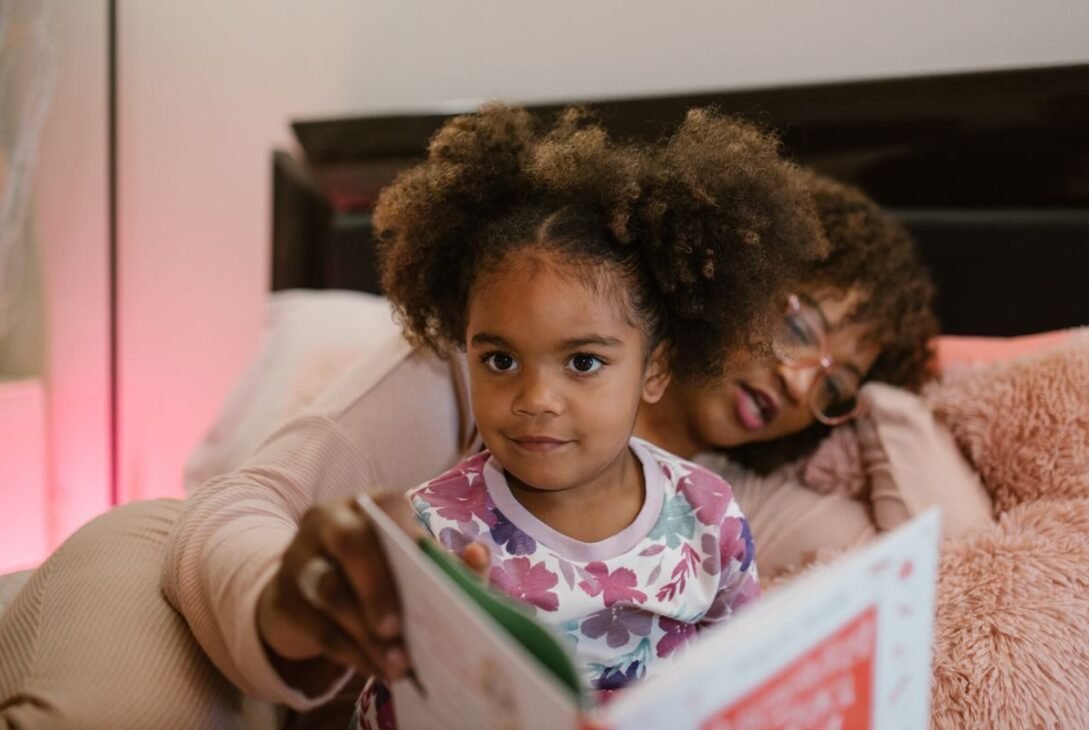
Reading together is one of the best bedtime activities. It builds language skills, closeness, and a calm mood. Agree in advance how many books or how long the reading will last, for example two short books, and stick to it.
6. Cuddles and Quiet Talk
Spend a few minutes talking about the day. You can ask, “What was the best part of today?” This helps children feel heard and releases worries before lights out. Say goodnight in a consistent way, such as a short phrase or a hug.
7. Lights Out
Leave the room while your child is calm and drowsy, not fully asleep, so they learn to fall asleep independently. A dim night light, a favorite soft toy, or a door slightly open can help children who are afraid of the dark.
Tailor the Routine to Age
Toddlers (1 to 3 Years)
- Keep the routine brief, around 20 to 30 minutes.
- Offer simple choices, such as which pajamas or which book, to give a sense of control.
- Use a comfort object if your child likes one.
- Be prepared for bedtime resistance, since this is a common phase.
Preschoolers (3 to 5 Years)
- Use a picture chart of the routine steps.
- Give a five-minute warning before the routine begins.
- Expect fears, such as the dark or monsters, and respond with reassurance rather than dismissal.
School-Age Children (6 to 12 Years)
- Let them take more responsibility for steps such as packing the school bag and setting out clothes.
- Allow reading in bed for a set time as a replacement for stories.
- Keep devices out of the bedroom.
Prepare the Bedroom
- Dark enough: use blackout curtains or a dim night light.
- Cool and comfortable: a slightly cool room usually helps sleep. Use light clothing or bedding appropriate for the season.
- Quiet: use soft background sound if outside noise is a problem.
- Calm space: keep toys and screens out of the sleeping area when possible, so the room is associated with rest.
Handling Common Bedtime Problems
Stalling and Curtain Calls
Children quickly learn that asking for water, another hug, or a trip to the bathroom delays bedtime. Build these into the routine: water and toilet before lights out. If your child calls out, respond briefly and calmly, without starting a new round of activities.
Getting Out of Bed
Quietly return your child to bed with minimal talk and no big reaction. It may take repeated returns over several nights, but consistency works.
Fear of the Dark
Take fears seriously. Check the room together, use a night light, and give them a comfort object. Avoid scary shows or stories in the evening.
Waking at Night
Brief wakings are normal. Keep responses calm and boring: reassure, tuck in, and leave. Avoid turning on bright lights or starting play.
Early Waking
Check that the room stays dark in the morning and that bedtime is not too early. A “wake-up light” or clock that shows when it is okay to get up can help older toddlers and preschoolers.
Be Consistent but Flexible
Routines work best when they are followed most nights. Holidays, illness, and travel will disrupt them, and that is fine. Return to the usual sequence as soon as possible. If both parents or other caregivers are involved, agree on the steps so the routine looks the same no matter who does it.
When to Seek Advice
Consult your child’s doctor if you notice loud snoring, pauses in breathing, frequent night terrors, regular sleepwalking, extreme daytime sleepiness, or persistent sleep problems that do not improve with routines. This article offers general information and does not replace medical advice.
FAQ
How long should a bedtime routine be?
Between 20 and 45 minutes is typical, depending on the child’s age.
What time should kids go to bed?
It depends on wake-up time and sleep needs. Many school-age children do well with bedtimes between 7:30 and 9 pm.
Should I let my child fall asleep with me?
It is a personal decision, but helping children learn to fall asleep independently in their own bed tends to reduce night wakings over time.
Is it okay to use a tablet as part of bedtime?
It is better to avoid screens in the last hour before bed, since they can delay sleep.
How long until a new routine works?
Many families see improvement within one to two weeks of consistent practice.
Conclusion
A calm, predictable routine is one of the most effective tools for better sleep and more peaceful evenings. Choose a realistic bedtime, plan a simple sequence, prepare the bedroom, and follow it consistently. Start tonight by switching off screens early and adding a short story. Small, steady steps lead to much easier bedtimes.