Many people know the pattern. You feel fine in the morning, then around three in the afternoon your focus fades, your head feels heavy, and you reach for something sweet. The cause is often not a lack of willpower. It is how your meals were built.
What you eat affects how steadily your body releases energy. This guide explains the basics in plain language and shows how to arrange meals so your energy stays more even through the day.
How Food Affects Your Energy
Your body breaks down carbohydrates into glucose, its main fuel. When you eat a meal made mostly of refined carbohydrates, such as white bread, pastries, or sugary drinks, glucose enters your blood quickly. Your body responds by releasing insulin to move that glucose into cells. For some people, this fast rise and fall can show up as a burst of energy followed by tiredness or cravings.
Meals that digest more slowly tend to produce a gentler, longer-lasting supply of energy. Three nutrients help with that: fiber, protein, and healthy fats, along with slow-digesting carbohydrates.
Responses vary from person to person, and other factors such as sleep, stress, hydration, and activity also affect how you feel. Food is one important piece, not the only one.
The Four Building Blocks
1. Fiber
Fiber slows digestion and helps you feel full for longer. It is found in vegetables, fruit, legumes, whole grains, nuts, and seeds. Lentils, chickpeas, beans, oats, and leafy greens are especially useful.
2. Protein
Protein also slows the absorption of carbohydrates and supports muscles and recovery. Good sources include eggs, fish, poultry, lean meat, yogurt, cheese, legumes, tofu, and nuts.
3. Slow-Digesting Carbohydrates
Carbohydrates are not the enemy. Choose forms that come with fiber: oats, brown rice, whole-grain bread, barley, quinoa, whole-wheat couscous, potatoes with their skins, and fruit. These release energy more gradually than refined versions.
4. Healthy Fats
Olive oil, avocado, nuts, seeds, and oily fish slow digestion and keep you satisfied. You do not need large amounts, but including a little at each meal helps.
Build a Balanced Plate
You do not need to count anything. A simple visual guide works well:
- Half the plate: vegetables or salad, plus fruit where it fits.
- A quarter: protein.
- A quarter: slow carbohydrates or whole grains.
- A small addition: healthy fat, such as a drizzle of olive oil or a handful of nuts.
Portion needs differ based on age, body size, activity, and health, so adjust to your own hunger and fullness.
Meal Ideas for Steady Energy
Breakfast
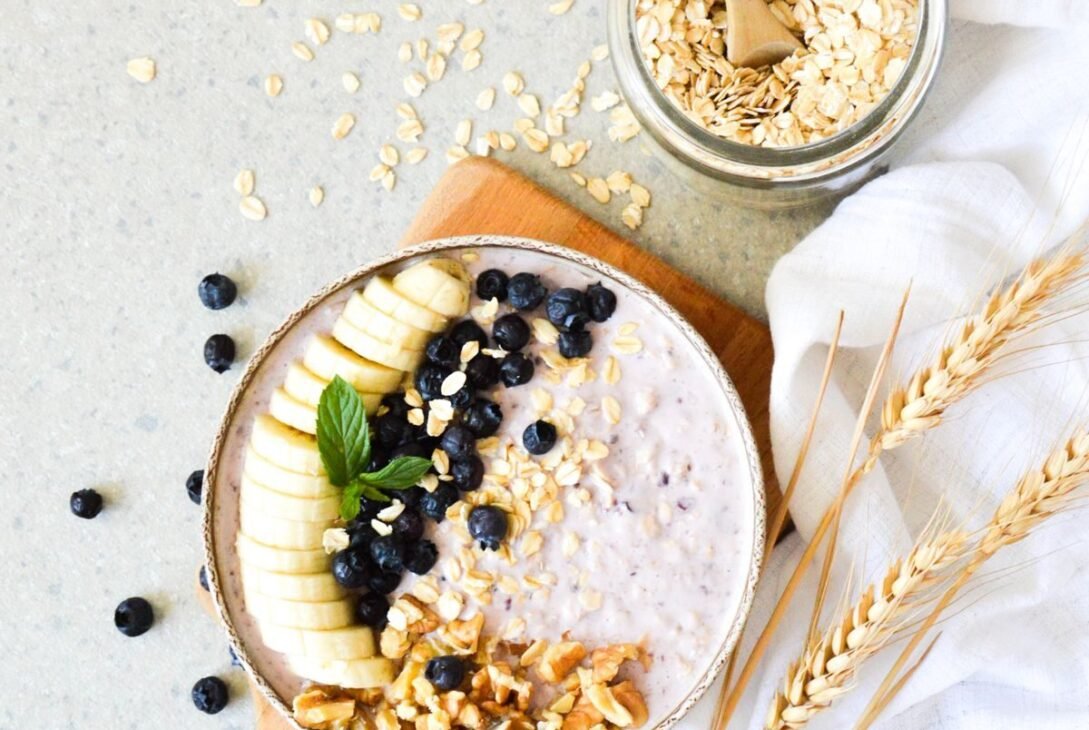
- Oats cooked in milk or water, topped with nuts, seeds, and sliced fruit.
- Eggs with whole-grain bread and tomatoes or vegetables.
- Plain yogurt with berries, a spoonful of seeds, and a handful of oats or muesli.
Compare these with a pastry and a sweet drink. The pastry meal is lower in fiber and protein, so hunger often returns quickly.
Lunch
- A lentil or chickpea salad with vegetables, olive oil, and lemon, served with whole-grain bread.
- Grilled chicken or fish with brown rice or quinoa and a large portion of vegetables.
- A vegetable soup with beans or lentils and a slice of whole-grain bread.
Dinner
- Baked fish, roasted vegetables, and a small portion of potatoes or barley.
- A vegetable and chickpea stew with whole-wheat couscous.
- Stir-fried vegetables with eggs or tofu and brown rice.
Snacks
- An apple or pear with a handful of almonds or walnuts.
- Plain yogurt with a few seeds.
- Carrot and cucumber sticks with hummus.
- Dates with a few nuts.
Pairing a carbohydrate with protein or fat, as in these snacks, slows the digestion of the carbohydrate.
Small Habits That Help
- Do not skip breakfast out of habit if it leaves you drained. Some people feel fine without it, but others crash later in the morning. Notice your own pattern.
- Eat sweets after a meal, not alone. A sweet treat after a balanced meal causes a smaller spike than the same food on an empty stomach.
- Start with vegetables. Beginning a meal with salad or vegetables and protein before the starchy foods may slow the rise in blood glucose for some people.
- Drink water through the day. Mild dehydration can feel like fatigue and headaches.
- Limit sugary drinks. Fruit juice and soft drinks deliver sugar with little fiber, and they are a common cause of energy crashes.
- Watch caffeine timing. Coffee or tea late in the day can interfere with sleep, which then affects energy the following day.
- Eat at regular times. Very long gaps between meals can lead to overeating or cravings.
When the Cause May Not Be Food
Constant tiredness can have many causes: poor sleep, stress, low iron or vitamin levels, thyroid problems, diabetes, depression, and other health conditions. If you feel unusually exhausted despite eating well and sleeping enough, speak to a doctor. If you have diabetes or take medication that affects blood sugar, follow your medical team’s advice about meals instead of relying on general tips.
A Simple One-Week Experiment
- Choose one meal, such as breakfast, and rebuild it with protein, fiber, and a slow carbohydrate.
- Keep the rest of your routine similar for a week.
- Each afternoon, write one line about your energy and focus.
- Compare the notes with a typical week before the change.
This gives you your own evidence rather than depending on general advice.
FAQ
Are carbohydrates bad for energy?
No. Your body needs them. The type matters: whole, fiber-rich carbohydrates give steadier energy than refined ones.
What should I eat to avoid an afternoon slump?
Build lunch around vegetables, protein, a slow carbohydrate, and a little healthy fat. Drink water and take a short walk afterward.
Do snacks help or hurt?
It depends. A planned snack with protein or fiber can bridge a long gap, while constant grazing on sweets can keep energy unstable.
Is fruit bad because it contains sugar?
Whole fruit contains fiber, water, and nutrients, and it is a good choice for most people. Fruit juice is a different story, since it lacks the fiber.
How quickly will I notice a difference?
Some people feel steadier within days, while others need a few weeks. Sleep, stress, and activity also influence results.
Conclusion
Steady energy comes from meals that digest gradually: plenty of vegetables, some protein, fiber-rich carbohydrates, and a little healthy fat. Start by improving one meal, observe how you feel, and build from there. This article is general information, and anyone with a medical condition should follow personalized advice from a healthcare professional.