A dripping tap or a running toilet may seem like a small annoyance, yet over weeks and months it wastes a surprising amount of water and slowly damages cabinets, floors, and walls. The good news is that many common leaks are simple to fix with basic tools and a little patience.
This guide covers the most frequent household leaks, how to find the cause, and which jobs are better left to a professional.
Safety First: Know Your Shut-Off Valves
Before any repair, find the valves that control your water.
- Fixture shut-off valves: small valves under sinks and behind toilets. Turn them clockwise to close.
- Main shut-off valve: controls water to the whole home. It is usually near the water meter or where the main pipe enters the building.
Test each valve now, when nothing is wrong, so you know it works and where it is. Keep a bucket, towels, and a flashlight nearby when you work. If a pipe is bursting or water is near electrical sockets, switch off the main water supply, cut electricity to the affected area if it is safe to do so, and call a qualified plumber or electrician.
Basic Tools to Keep at Home
- Adjustable wrench
- Pliers
- Screwdrivers, flat and cross-head
- Plumber’s tape (PTFE tape)
- Replacement washers and O-rings
- Bucket and old towels
- Small flashlight
Take the old part with you to the hardware shop, so you can buy the exact size.
Fixing a Dripping Tap
Most dripping taps are caused by a worn washer or O-ring inside the tap.
- Close the shut-off valve under the sink, then open the tap to drain remaining water.
- Plug the sink drain so small parts cannot fall in.
- Remove the handle. Many have a decorative cap hiding a screw.
- Use a wrench to unscrew the part underneath that holds the internal valve, often called the packing nut or bonnet.
- Take out the old washer or O-ring and compare it with the replacement. Check the valve seat for rust or damage as well.
- Reassemble in reverse order, open the shut-off valve slowly, and test.
Different tap types, such as ceramic disc or single-lever mixers, use cartridges instead of washers. Look up the model name or number, and consider replacing the whole cartridge, which is usually inexpensive.
Fixing a Running Toilet
A toilet that keeps running or refills by itself often needs a small adjustment inside the tank.
- Flapper problems: the rubber flapper at the bottom of the tank wears out and no longer seals. Replace it, which usually takes minutes. Hold the flapper up and see if the running stops.
- Chain length: if the chain is too tight, the flapper cannot close fully. If it is too loose, it can get caught. Adjust it so there is just a little slack.
- Fill valve or float: if water rises to the overflow tube, lower the float so the tank stops filling earlier. A faulty fill valve may need replacing.
To check for a silent leak, add a few drops of food coloring to the tank and wait fifteen to twenty minutes without flushing. If color appears in the bowl, the flapper is leaking.
Fixing Leaks Under the Sink
Place a dry paper towel or tissue on the pipes and connections under your sink. Wet spots show you where the water is coming from.
- Loose slip nuts: the large plastic nuts on drain pipes may simply need hand tightening. Do not overtighten, because plastic can crack.
- Worn gaskets or washers: if tightening does not help, unscrew the connection, check the rubber gasket, and replace it if it is cracked or flattened.
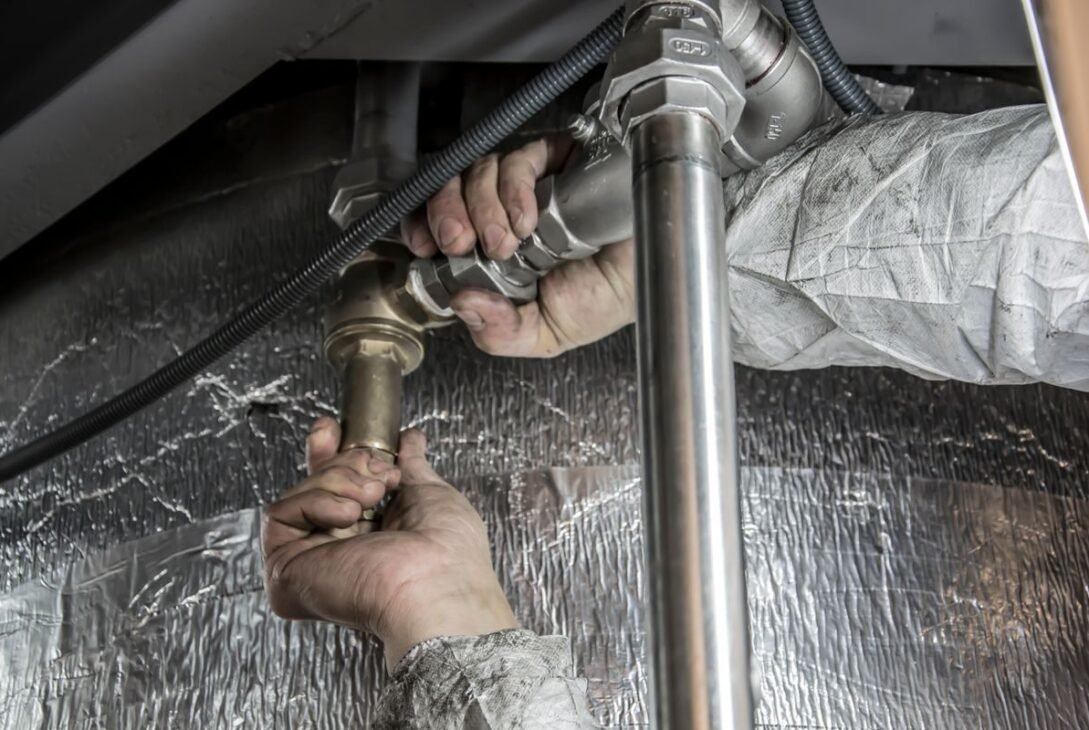
- Supply line leaks: flexible hoses that connect the shut-off valves to the tap can fail with age. Replace them with new ones of the same length and thread type.
- Threaded metal joints: wrap plumber’s tape around the male threads in the direction the fitting tightens, then reconnect.
Dry everything thoroughly, run water, and look again after ten minutes and again after a few hours. Slow leaks often take time to show.
Showerheads and Hoses
Leaks at the showerhead connection are usually fixed by unscrewing the head, wrapping fresh plumber’s tape around the threads, and screwing it back on. If water seeps from the hose, check the rubber washers at both ends and replace them if they are brittle.
Limescale can cause poor sealing and reduced flow. Soaking the showerhead in a vinegar solution for an hour usually helps, though you should check the manufacturer’s advice for special finishes.
Spotting Hidden Leaks
Not every leak is visible. Warning signs include:
- A water bill that rises without any change in habits.
- Damp patches, peeling paint, or bubbling plaster on walls and ceilings.
- A musty smell that does not go away.
- The sound of running water when everything is off.
- Warped or stained flooring.
To test, turn off all taps and appliances, then check your water meter. If the numbers keep moving, water is escaping somewhere. Hidden leaks inside walls, under floors, or in underground pipes are jobs for a professional with proper detection equipment.
When to Call a Plumber
- The leak comes from inside a wall, ceiling, or floor.
- A pipe is corroded, cracked, or bulging.
- Water pressure suddenly drops throughout the house.
- You have repaired the same joint twice and it still leaks.
- The leak involves a water heater, gas appliance, or electrical area.
Repairs involving gas or electricity carry real risks, so they should only be done by a qualified professional.
Preventing Future Leaks
- Check under sinks and behind toilets every month.
- Replace old flexible hoses every few years, even if they look fine.
- Do not use excessive force on taps and valves.
- Insulate exposed pipes in cold areas.
- Learn what your normal water bill looks like so you notice changes early.
FAQ
Why does my tap drip even when it is fully closed?
A worn washer, damaged O-ring, or corroded valve seat is the usual cause. Replacing the washer or the cartridge normally solves it.
How much water does a small leak waste?
Even a slow drip can add up to many litres each day, and a running toilet can waste far more. The exact figure depends on the size of the leak.
Is plumber’s tape enough to fix a leaking pipe?
It works for threaded joints, but not for cracks or holes in a pipe. A damaged pipe section needs repair or replacement.
Can I use silicone sealant on a leaking joint?
It may work as a temporary measure around fixtures, but it is not a proper fix for pressurized pipe joints.
What should I do first if I find a leak?
Close the nearest shut-off valve or the main valve, dry the area, and identify the source before attempting a repair.
Conclusion
Most leaks start small, and catching them early saves money and prevents damage. Learn where your shut-off valves are, keep a few spare parts and tools, and fix simple problems before they grow. For anything hidden or dangerous, call a professional without delay.