A cluttered kitchen slows you down every day. You search for the right lid, reach past three bowls to find a spice, and buy duplicates of things you already own. The good news is that you do not need new cabinets or a big budget to fix this. A few smart systems and some inexpensive containers can make a small kitchen work much better.
Start by Emptying and Sorting
The biggest mistake is organizing before decluttering. Containers cannot fix a kitchen that holds too many things.
- Pick one zone at a time. A single drawer, one cabinet, or the pantry shelf. Doing the whole kitchen at once leads to exhaustion.
- Take everything out. Wipe the empty space clean.
- Sort into three piles: keep, give away or discard, and relocate to another room.
- Check dates. Throw away expired food and spices that have lost their aroma.
Be honest about duplicates and rarely used gadgets. If you have not used a tool in a year, it is probably taking space from something you need daily.
Organize by Zones
Group items by what you do with them, and store them near where you use them.
- Cooking zone: near the stove. Pots, pans, cooking oil, spices, spatulas, and oven mitts.
- Prep zone: near the main counter. Cutting boards, knives, mixing bowls, and measuring tools.
- Cleaning zone: near the sink. Dish soap, sponges, cloths, and trash bags.
- Serving and eating zone: near the table or dishwasher. Plates, glasses, cutlery.
- Food storage zone: pantry and fridge. Dry goods, containers, and snacks.
The aim is to reduce walking back and forth. Things you use every day belong at eye level or between waist and shoulder height. Things used a few times a year can go on high shelves or in the back.
Drawer Systems That Work
Loose items in a drawer turn into a jumble in days. Dividers fix that.
- Cutlery trays: adjustable ones fit most drawers.
- Utensil dividers: keep spatulas, ladles, and whisks separate so you can find them quickly.
- Vertical storage: store baking sheets, cutting boards, and lids upright using inexpensive dividers or tension rods.
- Non-slip liners: stop items from sliding every time you open the drawer.
You can build simple dividers from sturdy cardboard boxes or small baskets while you test a layout, then replace them later if the system works.
Cabinet Solutions
Deep cabinets waste space because items at the back get forgotten.
- Shelf risers: double the usable height by letting you stack plates or bowls on two levels.
- Pull-out baskets or lazy Susans: make back corners reachable.
- Door-mounted racks: hold pot lids, cleaning supplies, or wraps.
- Stackable bins: keep similar items together, such as baking supplies or snack packets.
- Hanging hooks: mugs and measuring cups can hang under a shelf.
Store pots and pans with lids nested or stored separately in a rack. Place the pans you use most at the front.
Pantry Organization
A pantry works best when you can see everything at a glance.
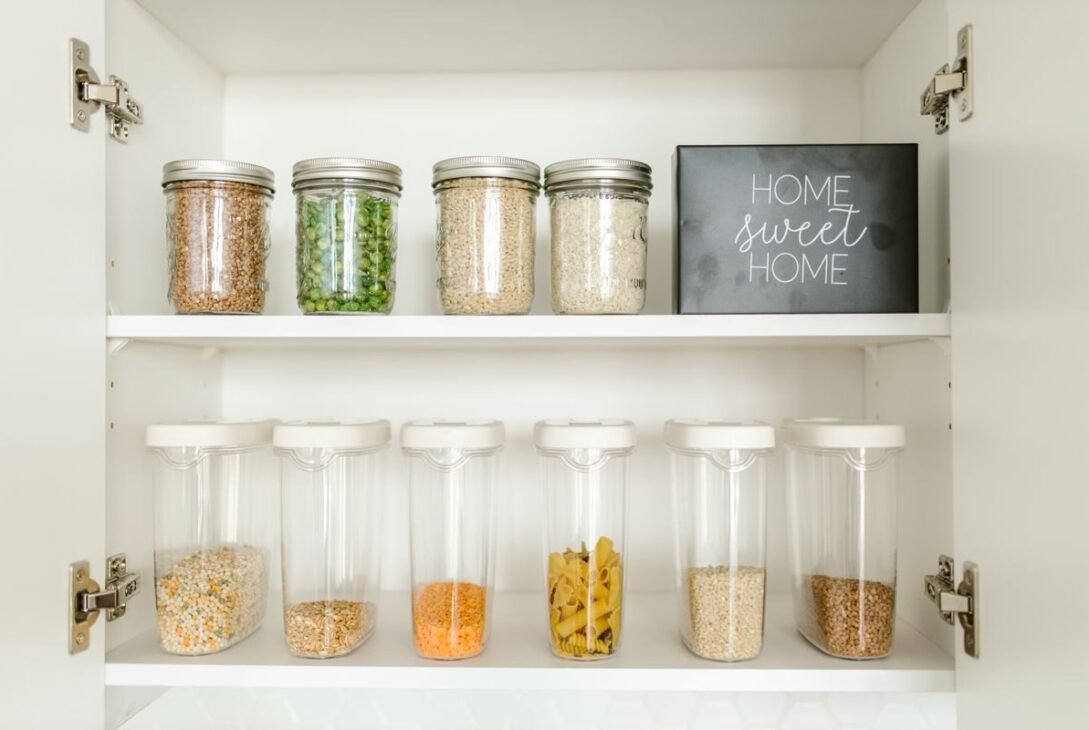
- Decant when it helps. Clear containers for flour, rice, pasta, and grains keep food fresh and show you when stocks run low. They also protect against pests. You do not need a matching set. Reusing clean jars works well.
- Group by category. Breakfast items, baking, canned goods, snacks, and spices each get their own spot.
- Use labels. Write the product name and, where useful, the expiry date.
- First in, first out. Place newer items behind older ones so nothing expires unnoticed.
- Use baskets for small items. Packets and sachets fall over easily without a container.
Keep spices in one place, such as a drawer, a tiered shelf, or a rack on the inside of a cabinet door. Store them away from the stove, because heat and steam reduce their flavor.
Make the Most of Walls and Counters
- Install a rail with hooks for utensils and small pots.
- Add a magnetic strip for knives, as long as it is positioned safely out of children’s reach.
- Use a wall-mounted shelf for jars, cookbooks, or frequently used items.
- Keep counters clear apart from items you use daily, like a kettle or a cutting board.
A tidy counter makes the whole kitchen feel larger and easier to clean.
Handle the Awkward Items
- Food storage containers: match each container with its lid, discard any that are warped or missing parts, and store them with lids on or in a dedicated bin.
- Plastic bags and wraps: keep them in a box inside a drawer or on a door.
- Cleaning products: store them in a caddy under the sink, away from food, and keep them out of reach of children.
- Large appliances: if you use a blender or mixer rarely, keep it on a high shelf or in a lower cabinet rather than taking up counter space.
Keep It Organized
A system only works if it is easy to maintain.
- Give every item a home, and return it there after use.
- Do a five-minute reset at the end of the day.
- Review one zone every month for expired items or things that no longer belong.
- Before buying anything new, check what you already have.
If the system feels like too much effort, simplify it. The best layout is the one your household will actually follow.
A Low-Cost Shopping List
- Drawer dividers or small baskets
- A pair of shelf risers
- Clear containers or recycled jars
- A label maker or masking tape and a marker
- A few hooks and a hanging rail
- Non-slip shelf liner
Measure your cabinets and drawers before buying so everything fits properly.
FAQ
Where should I start organizing my kitchen?
Start with one drawer or one cabinet. A small win builds momentum and shows you what works.
How can I organize a small kitchen with little storage?
Use vertical space with shelves and hooks, remove duplicates, and keep only daily items on the counter.
Do I need to buy matching containers?
No. Reused jars and mixed containers work just as well. The organization matters more than the appearance.
How often should I clean out the pantry?
Every three to six months is a good rhythm, plus a quick check whenever you shop.
What is the best way to store spices?
Keep them in a cool, dark place away from the stove, in labeled containers you can see at a glance.
Conclusion
A well-organized kitchen is not about perfection. It is about making daily tasks easier. Declutter first, group items by how you use them, and add a few simple storage tools. Pick one drawer this weekend, and let that small change guide the rest.