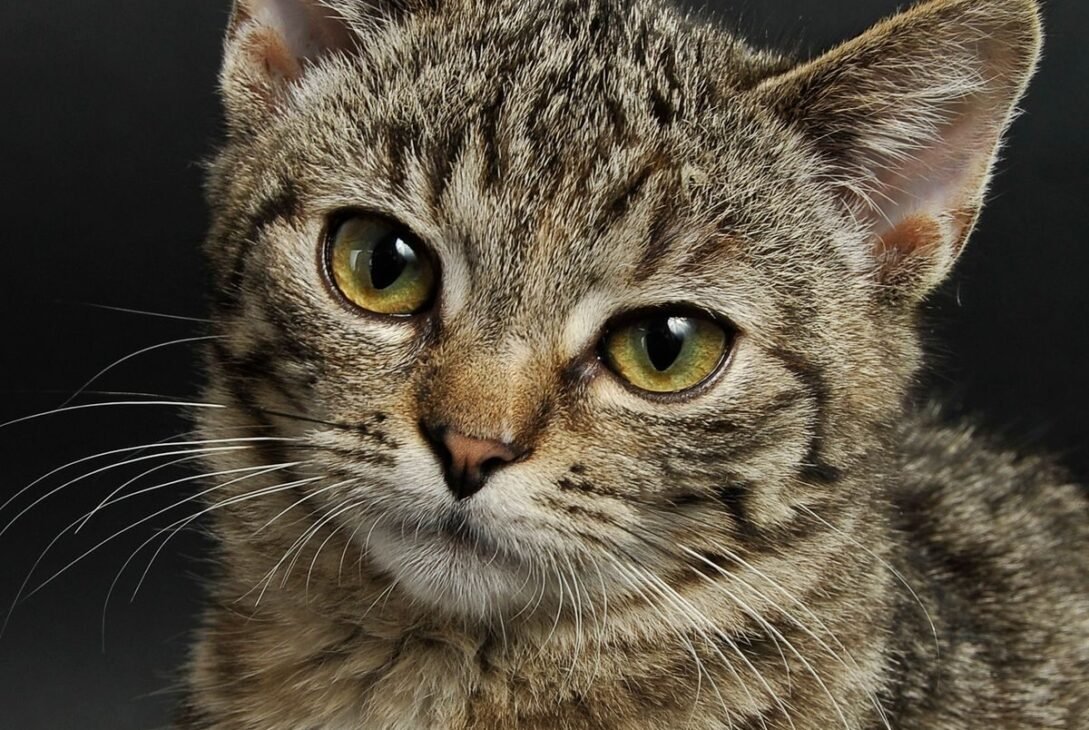
Cats cannot tell us how they feel, but they communicate all day long with their bodies. A tail flick, a slow blink, a tilt of the ears: each gives clues about mood and intentions. Learning this language helps you respond to your cat’s needs, avoid scratches and stress, and notice early signs that something is wrong.
This guide explains what tails, ears, eyes, whiskers, and sounds mean, and how to read them together.
The Golden Rule: Read the Whole Cat
No single signal tells the full story. A wagging tail does not mean the same thing in cats as in dogs, and ears can change meaning depending on posture and context. Look at the tail, ears, eyes, whiskers, body position, and the situation together. Also remember that every cat is an individual, and what is typical for one cat may differ for another.
Tail Signals
- Tail straight up, perhaps with a slight curl at the tip: a friendly, confident greeting. Many cats approach with the tail up.
- Tail up and quivering: strong excitement or affection, often seen at mealtimes or when you return home.
- Tail held low or tucked under the body: fear, anxiety, or unease. A tucked tail can also signal illness or pain.
- Slow side-to-side swish: concentration, as when watching prey, or mild annoyance.
- Fast lashing or thumping: irritation or growing anger. Give the cat space.
- Puffed-up tail: fear or alarm. The cat is trying to look bigger.
- Tail wrapped around you or another cat: affection, similar to a hug.
Ear Signals
- Ears forward and relaxed: calm and interested.
- Ears swiveling: the cat is listening to different sounds and assessing its surroundings.
- Ears flattened sideways (“airplane ears”): nervousness or irritation.
- Ears pressed flat against the head: fear or defensive aggression. The cat may hiss or strike if pushed.
- Ears angled back but not flat: possible annoyance or uncertainty.
Eye Signals
- Slow blinking: often called a “cat kiss”. It signals trust and relaxation. You can return it by slowly closing and opening your eyes.
- Wide eyes with large pupils: excitement, fear, or arousal, depending on context and light.
- Narrow slits: can mean contentment in soft light, but also tension or aggression if combined with a stiff body.
- Hard stare: a challenge or threat in cat language. Avoid staring at an unfamiliar or nervous cat.
- Half-closed eyes: relaxation and comfort.
Whisker Signals
- Relaxed, slightly to the side: calm.
- Pushed forward: curiosity, hunting mode, or alertness.
- Pulled back against the face: fear, stress, or defensiveness.
Body Posture
- Lying on the side or back with relaxed paws: deep trust and comfort. An exposed belly does not always mean a belly rub is welcome, and some cats may grab or claw.
- Loaf position, with paws tucked under: relaxed, though ready to move if needed.
- Arched back with fur standing up and sideways stance: fear or aggression, a display to look bigger.
- Crouched, tense, tail low: fear. The cat may run or lash out.
- Rear wiggle before pouncing: hunting preparation, usually during play.
- Stretching: relaxation or a friendly greeting.
Sounds and What They Mean
- Purring: often contentment, but cats may also purr when stressed, in pain, or unwell, as a self-soothing behavior. Check the rest of the body language.
- Meowing: mainly directed at humans. It can signal greetings, hunger, attention-seeking, or discomfort. Excessive or sudden new meowing can indicate a medical issue.
- Chirping or trilling: a friendly greeting or excitement, often used by mothers calling kittens.
- Chattering at birds or insects: frustration and excitement while watching prey.
- Hissing and spitting: fear and a warning to back off.
- Growling or yowling: serious distress or aggression. Give the cat space and look for causes.
Other Common Behaviors
- Head bunting and cheek rubbing: a way of marking you with their scent and showing affection.
- Kneading: a leftover kitten behavior linked to comfort and contentment.
- Scratching: maintains claws, stretches muscles, and marks territory with scent. Provide scratching posts.
- Bringing “gifts”: an instinct linked to hunting and sharing.
- Hiding: a cat under stress, ill, or in pain often hides. Persistent hiding needs attention.
- Over-grooming: can indicate stress, boredom, allergies, or pain.
Reading Mood Combinations
- Happy and relaxed: tail up or loosely down, soft eyes, relaxed ears and whiskers, slow blinks.
- Playful: ears forward, eyes wide, rear wiggle, crouching, short bursts of running.
- Anxious: low or tucked tail, ears sideways or back, wide eyes, hiding or crouching.
- Angry or defensive: flattened ears, hissing, puffed fur, lashing tail, tense body.
How to Respond
- If your cat is relaxed, offer gentle petting around the cheeks and chin, and stop when the cat signals enough.
- If your cat shows signs of overstimulation, such as twitching skin, flicking tail, or flattened ears, stop touching and let the cat leave.
- If your cat is afraid, reduce noise and stress, offer hiding places, and never force interaction or punish.
- Use play with wand toys to channel energy and build confidence.
- Respect the cat’s choices. Cats feel safest when they control how much contact they have.
When Body Language Signals Illness
Sudden changes can point to health problems. See a vet if your cat shows:
- Hiding more than usual, or unusual withdrawal.
- Changes in appetite, drinking, or litter box habits.
- Aggression that is new or out of character.
- Constant meowing, especially at night.
- Limping, hunched posture, or reluctance to jump.
Cats are skilled at hiding pain, so subtle changes are important. This article is general information and does not replace veterinary advice.
Related Reading
- Cat Enrichment at Home: Climbing, Hunting Games, and Window Perches
- Choosing a First Pet: Cat, Rabbit, Fish, or Bird? Matching Pets to Your Lifestyle
- I Moved Across the Country Alone, My Cat Made Me Brave Enough
FAQ
Why does my cat bite me during petting?
Often from overstimulation. Watch for tail flicking, skin twitching, and ear changes, and stop before the bite.
What does it mean when a cat shows its belly?
It usually signals trust and comfort, but not always an invitation to touch it.
Do cats really smile?
Cats do not smile like humans, but slow blinks and relaxed faces show contentment.
Why does my cat stare at me?
Soft staring with slow blinks is affectionate. A hard, unblinking stare can be a challenge or a request, such as for food.
Is a wagging tail a good sign?
Not usually. A fast wagging or lashing tail in a cat often signals irritation or tension.
Conclusion
Understanding cat body language makes life calmer for both of you. Watch the tail, ears, eyes, and posture together, respect your cat’s signals, and pay attention to sudden changes. Spend a few minutes today simply observing your cat, and see how many messages you can read.